



Most young, urban Filipinos believe caregiving and earning responsibilities should be shared equally. So why do Filipino women still three times as much unpaid care work as men? Investing in Women’s new research points to the gap between changing attitudes and everyday realities and what this means for women’s economic participation in the Philippines.
Manila, Philippines | June 17, 2026 — Investing in Women (IW), an initiative of the Australian Government, convened leaders across government, business, civil society, and academia to mark the Philippine launch of two new studies on gender norms and the care economy.
The event presented findings from the 2024 Social Norms, Attitudes and Practices Survey (SNAPS) and the Future Demand for Care (FDC) study, offering new evidence on how gender norms and care systems interact to shape women’s economic participation in the Philippines.
’Gender Equality Paradox’
Despite being recognised as a regional leader in gender equality, the Philippines has continued to see low participation by women in the labour force. The two studies show that this “gender equality paradox” is driven in part by the intersection of strong gender‑equal attitudes with entrenched caregiving norms and increasing care demands.
SNAPS findings show that most Filipinos support equal sharing of caregiving and economic roles, yet fewer report practicing this in everyday life—particularly in childcare and housework. This gap between attitudes and behaviour is likely driven by persistent gender norms, where women are expected to be the primary care providers, and men the primary breadwinners. This is compounded by weaknesses in care systems which the FDC study suggests can worsen amid multiple pressures.
For example, among the 2,000 Filipino respondents in SNAPS, 84% of women and 81% of men agreed that childcare responsibilities should be shared equally between partners, but only 69% of women and 67% of men reported practicing this. Among the factors informing this attitude-behaviour gap is the related finding that many respondents underestimate support for gender equality.
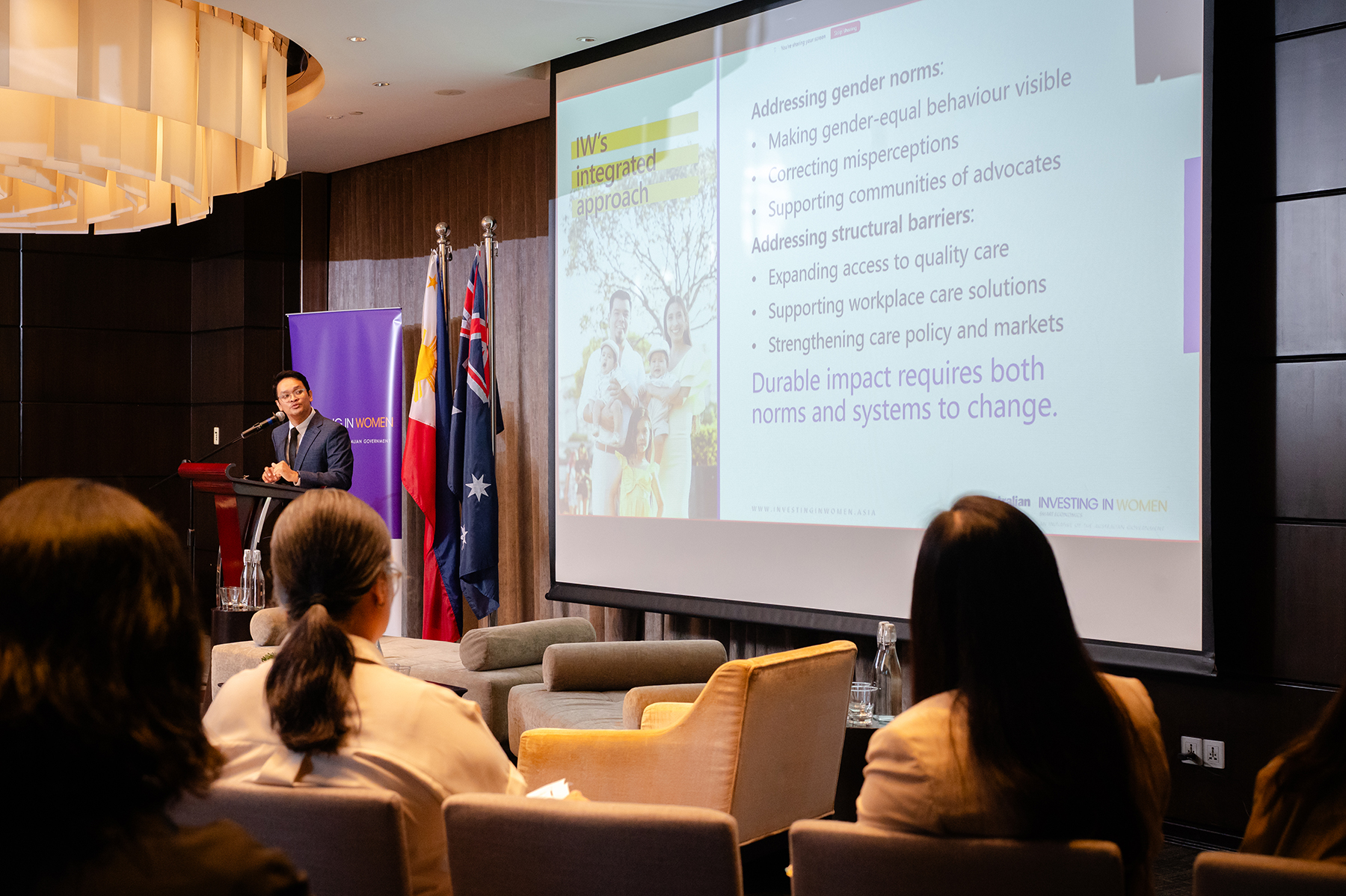
Inadequate structural support for gender-equal behaviour could also be hindering Filipinos from putting progressive attitudes into practice. For example, lack of parental leave, flexible work, and childcare support, can reinforce gendered care roles. The FDC study highlights that demand for care in the Philippines is rising due to factors such as population ageing, urbanisation, migration, and climate-related shocks. Without adequate, accessible, and affordable care systems, these pressures are likely to continue constraining women’s participation in paid work.
Multistakeholder Action
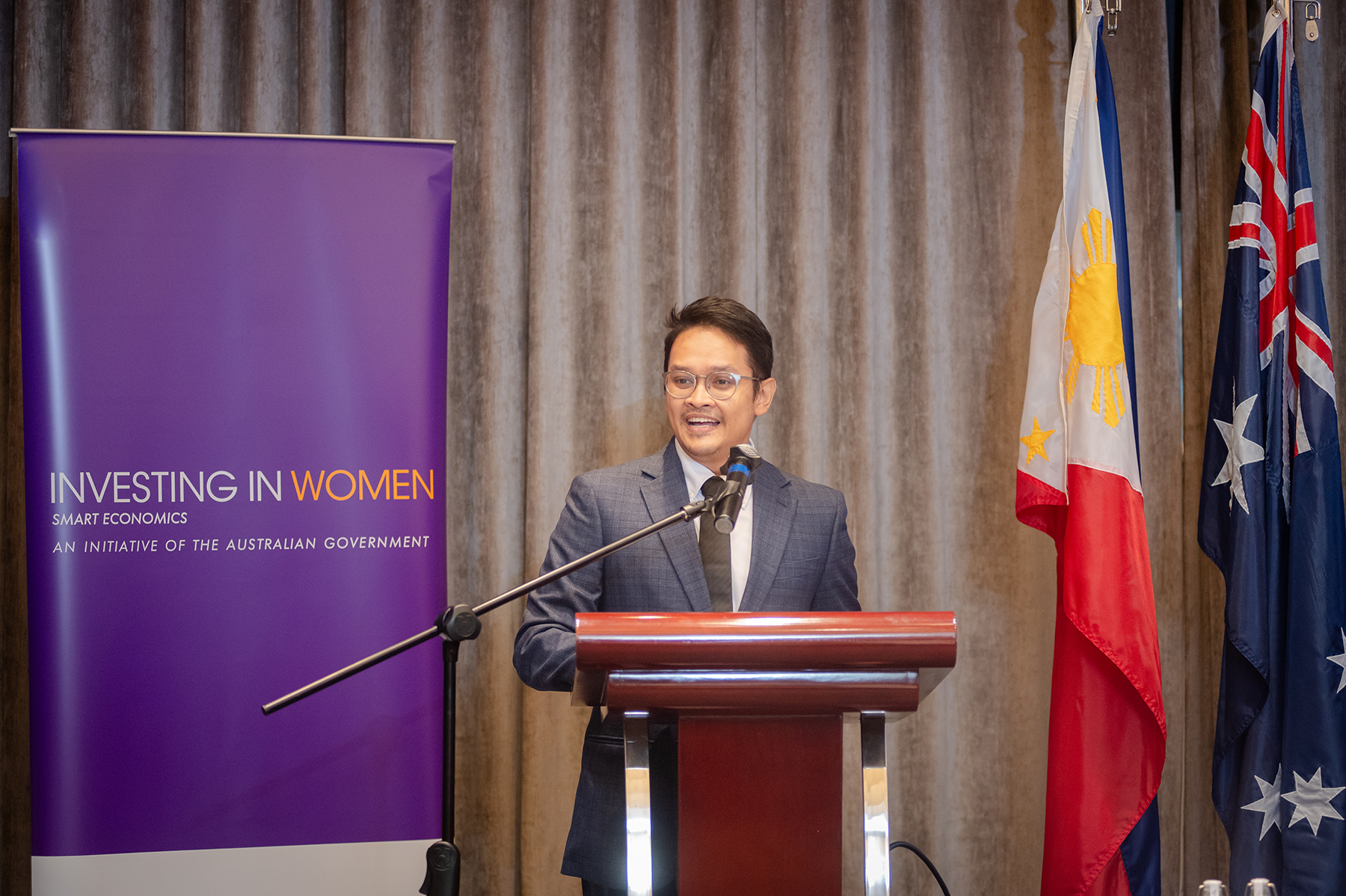
In launching the reports, Australia’s Deputy Ambassador to the Philippines, Mr Nicholas Kay, reiterated Australia and the Philippines’ shared commitment to advancing gender equality for inclusive and sustainable development and highlighted the need for a multistakeholder approach to address these challenges.
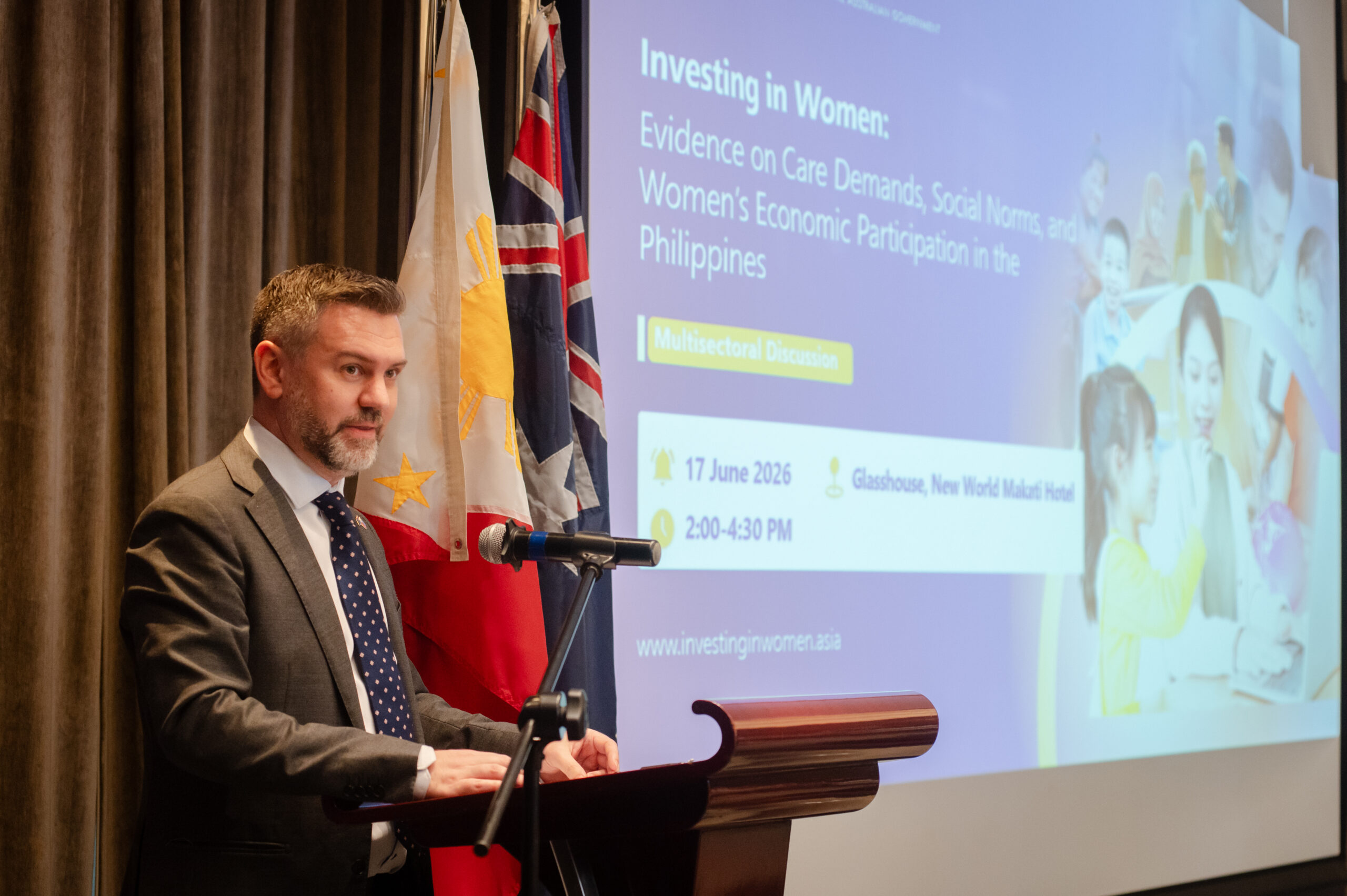
“Australia is proud to stand with the Philippines to advance women’s economic equality,” Mr Kay said. “Your presence here today—as policymakers, employers, advocates, and practitioners—reflects the strength of this partnership and our shared commitment to tackling the structural barriers that limit women’s participation, informed by an understanding of social norms and care.”
The event featured a panel discussion with the Department of Economy, Planning, and Development (DEPDev), Cebu Pacific, Oxfam Pilipinas and the Philippine Institute for Development Studies (PIDS).
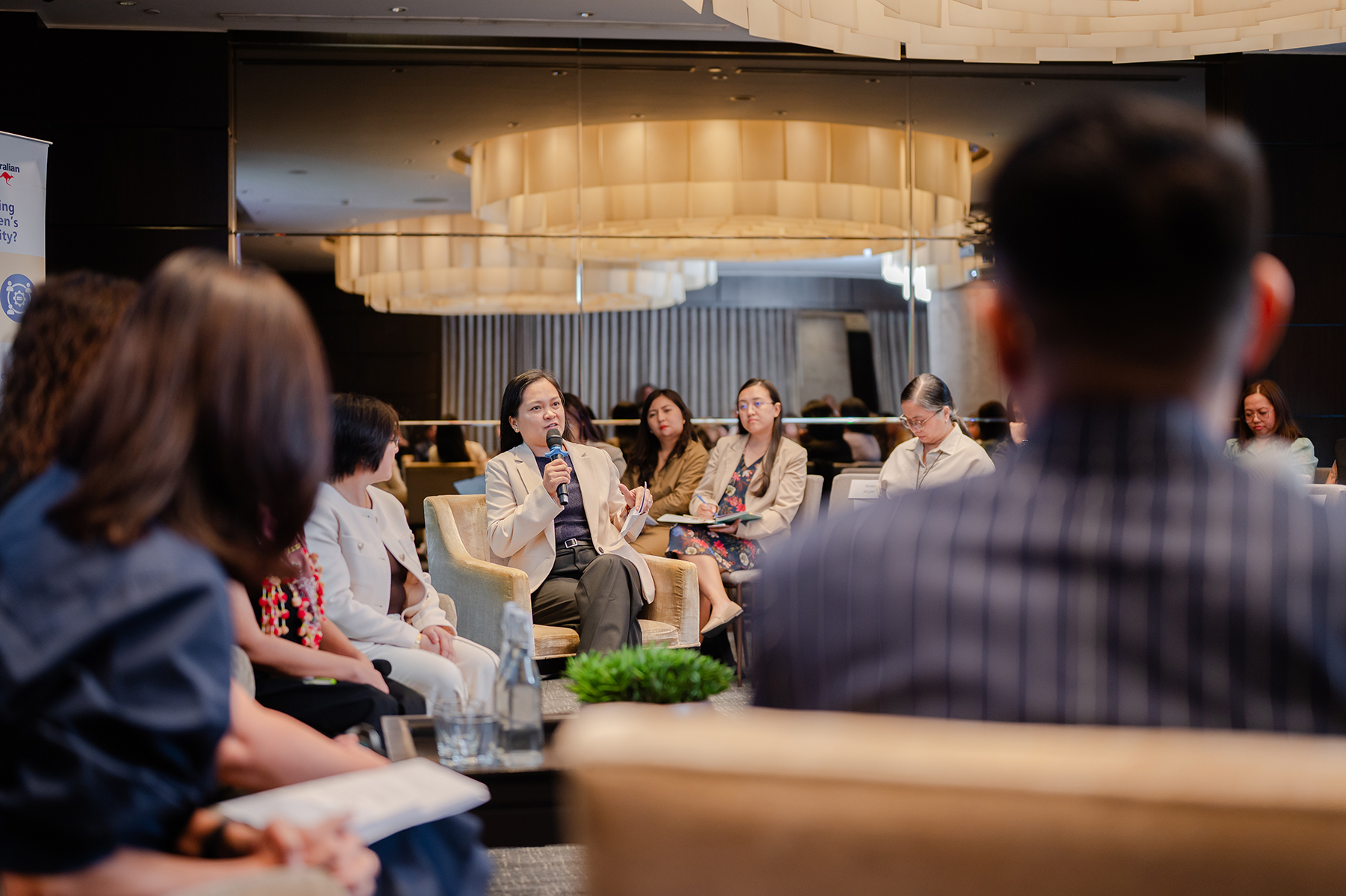
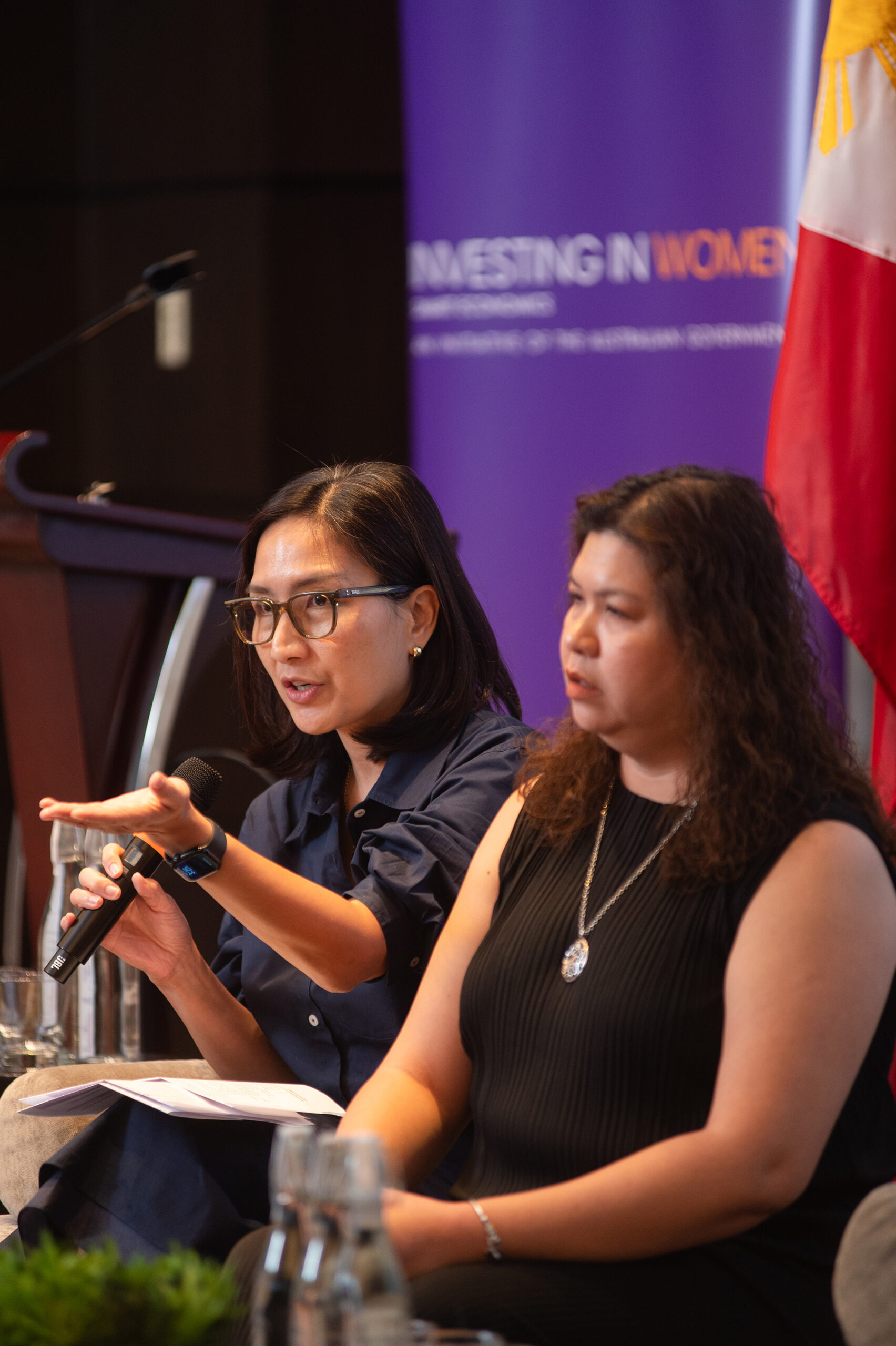
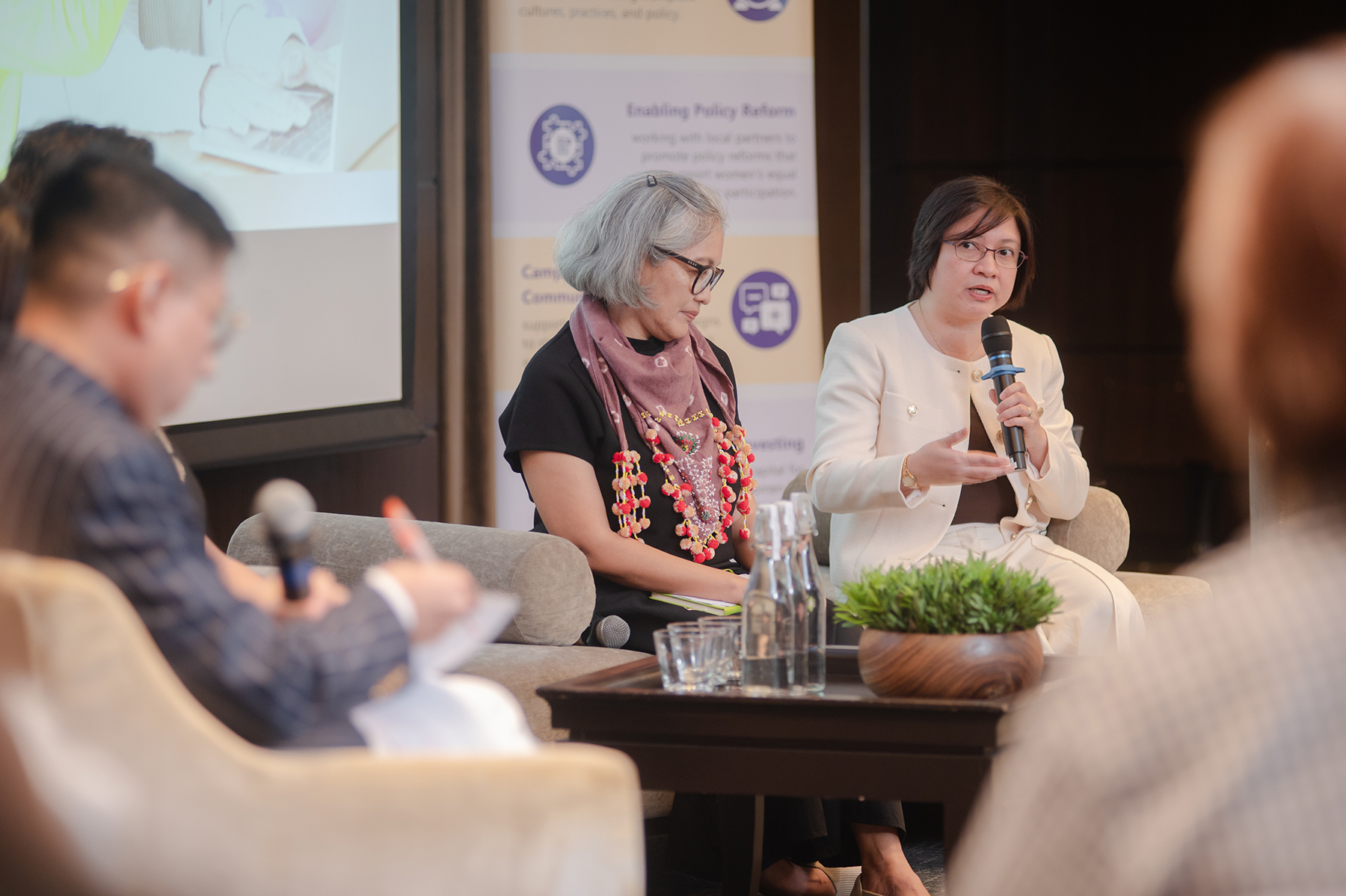

The discussion brought together sectoral perspectives on how policies, workplace practices, and community-level interventions can better respond to this challenge. Participants reflected on practical entry points to address care constraints while supporting shifts in gender norms, recognising that neither can be addressed in isolation. These include flexible work arrangements employer-supported or community-based childcare models, and private sector-led innovations in care service delivery.
This echoed insights from the presentation of the research by Mr. Kim Patria, IW’s Director for Campaigns and Communities of Practice. “Women’s economic equality in the Philippines is not constrained by aspiration, but by the interplay of care and norms. When care systems do not keep pace, households fall back on traditional expectations, and women absorb the cost. Lasting change requires addressing both at the same time.”
About the Research Studies
The Social Norms, Attitudes and Practices Survey (SNAPS) 2024 and the Future Demand for Care (FDC) Study were led by the Global Institute for Women’s Leadership (GIWL) at the Australian National University, in partnership with IW and local research partners, including the Philippine Institute for Development Studies (PIDS).
SNAPS explores how people support, practice and advocate for gender equality in everyday life. It includes findings from an online survey of 8,000 respondents from across Indonesia, Malaysia, the Philippines and Vietnam. In each country, the survey included 2,000 women and men aged 18–40 from urban areas. Survey results were complemented by qualitative interviews and validation workshops that explored the social norms shaping attitudes, behaviours and advocacy.
The FDC study examines how demographic, social, and economic trends are expected to influence future demand for childcare, disability care, and elder care across Indonesia, the Philippines, and Vietnam over the next 25 years.
About Investing in Women
Investing in Women (IW) is an Australian Government initiative to accelerate women’s economic equality and promote inclusive economic growth across Southeast Asia. Through partnerships with diverse stakeholders, IW supports women to thrive in the workplace and succeed in business.
IW uses innovative approaches to catalyse women’s economic participation through four workstreams: workplace gender equality, enabling policy reforms, campaigns and communities of practice, and gender lens investing.
References:
Philippine Statistics Authority (PSA) . (2026, May 6). Labor Force Survey (March 2026). Philippine Statistics Authority. https://psa.gov.ph
Albert, J. R. G., Ramos, A. P. G., & Vizmanos, J. F. V. (2026). High marks, hidden barriers: Why gender rankings tell only half the story (PIDS Policy Notes No. 2026-05). Philippine Institute for Development Studies. https://pidswebs.pids.gov.ph/CDN/document/pidspn2605.pdf