




Before engaging with Nhà Nhiều Cột, Lê Trang was already passionate about social work and gender equality. She had taken part in youth-led projects and facilitated gender workshops at her university. However, despite her enthusiasm, she often felt that something was not working as intended. Sometimes only a handful of people attended an event. Sometimes the audience was not the one she hoped to reach. Other times, workshops ran far longer than planned and she struggled to keep discussions on track. Trang cared deeply about creating change, but she knew she might have lacked the experience and practical skills to do it effectively. That began to change when she joined the Nhà Nhiều Cột project led by TUVA Communication, with support from Investing in Women, an initiative of the Australian Government. Through its Housemates Community of Practice (CoP), she found not only training opportunities but also a space to learn alongside peers, test ideas, and reflect on her experiences. This kind of peer learning and reflection is at the heart of how CoPs help early adopters of gender equality build confidence and strengthen their capacity as advocates.
Learning to See Through Participants’ Eyes
Trang described many of her learning experiences in Nhà Nhiều Cột as moments of having preconceptions “shattered.” Ideas and approaches she had previously believed were effective were challenged by new perspectives and experiences shared within the community.

Trang takes part in a training session supported by TUVA- Nha Nhieu Cot. (Photo from TUVA-Nha Nhieu Cot)
Working alongside her peers within the Housemates Community of Practice, consulting with experts, and reflecting throughout the process, Trang began to shift her focus from delivering activities to understanding participants. Instead of starting with what she wanted to teach, she learned to consider what participants cared about, what motivated them, and how they experienced a workshop. This change helped her design a more engaging initiative on comprehensive sexuality education during Hanoi Gender Week 2025. Rather than running a traditional workshop, she created three interactive booths where participants could explore topics of their choice, with facilitators adapting discussions to their existing knowledge and questions. As a result, nearly 50 participants reported greater confidence and a stronger sense of safety when discussing sensitive topics. For Trang, this experience represented more than a successful event. It changed how she understood participation itself. Rather than measuring success only through attendance or outputs, she began paying closer attention to whether people felt heard, engaged, and able to contribute on their own terms. Understanding participants’ values, experiences, and motivations became central to how she now evaluates the quality and impact of an initiative.
Change Happens Through Relationships
Fast forward to early 2026, when Trang successfully secured another mini-grant to implement a larger and more complex initiative. She encountered a range of challenges, including communication gaps within the team, missed deadlines, and difficulties with planning, monitoring, and evaluation. At first, she viewed these as technical issues that could be solved through better project management and coordination.
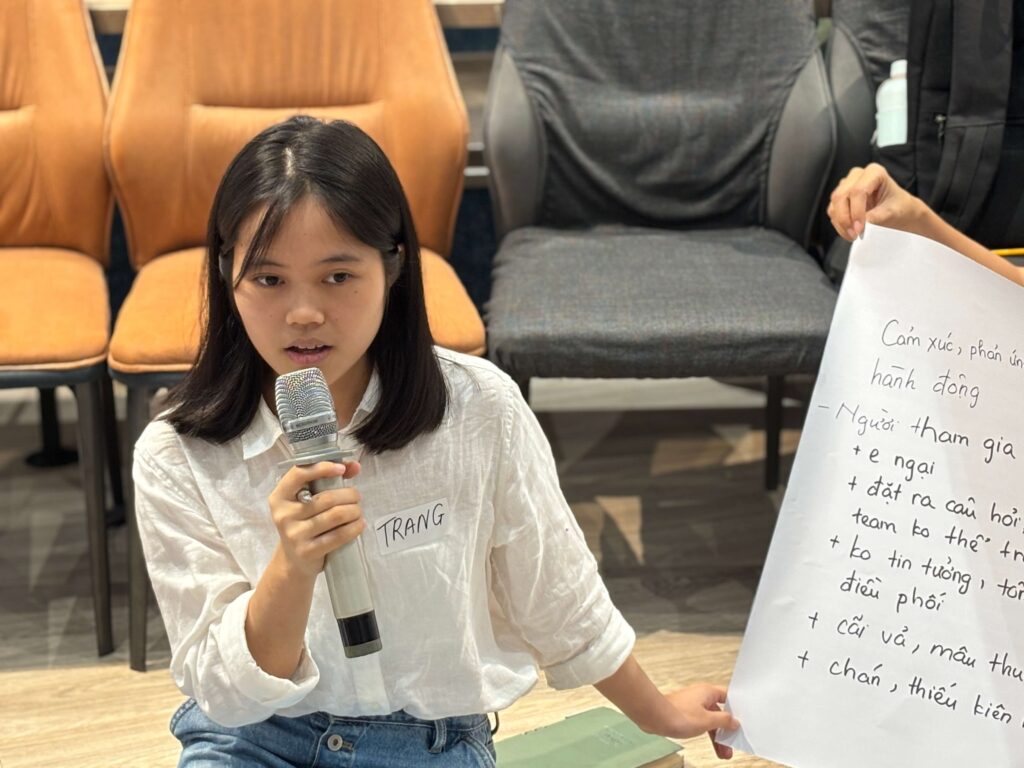
Trang engages in group discussions with fellow members during a monthly meeting of the Housemates Community of Practice. (Photo from TUVA-Nha Nhieu Cot)
Through reflection sessions and conversations within Nhà Nhiều Cột, Trang gradually realised that many of these challenges were actually about relationships. Her team had been focused on completing tasks, but they had not created enough space for members to share difficulties, ask for support, or be vulnerable with one another. One experience became a turning point. When an expert supporting the initiative suggested postponing their involvement, Trang’s first instinct was to simply accept the situation. Drawing on peer discussions through Housemates about power, values, and collective responsibility, she decided instead to start a conversation. By openly discussing their shared commitment to the initiative, they were able to find a solution together and continue the activity. For Trang, this was an important lesson: Advocacy is not only about solving problems, but also about building trust, dialogue, and collaboration.
Building Better Advocates Through Community
Today, Trang confidently identifies herself as a member of Housemates. What she found in Nhà Nhiều Cột was not simply technical support for running projects, but a community that encouraged reflection, experimentation, and growth.
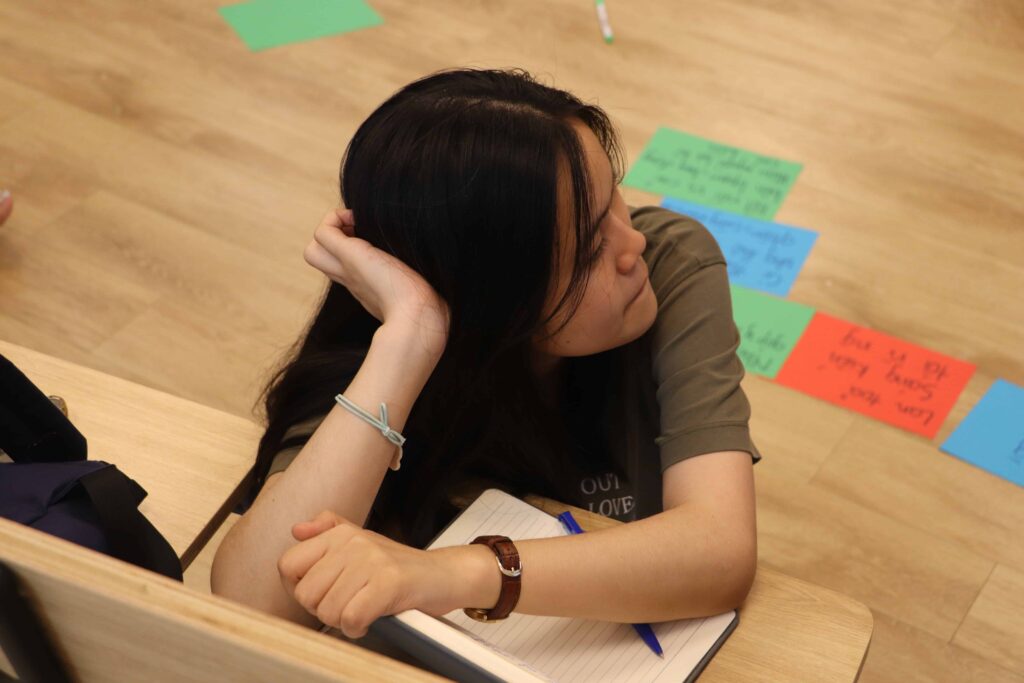
Trang participates in a monthly meeting of the Housemates Community of Practice. (Photo from TUVA-Nha Nhieu Cot)
Her journey shows how Communities of Practice can strengthen advocates by providing a safe space to learn from mistakes, challenge assumptions, and navigate complexity together. Through Housemates, Trang became not only a more capable project lead, but also a more thoughtful advocate who understands that meaningful change is built through participation, relationships, and continuous learning.