




For many people, gender equality begins as an idea. It is something they encounter in a workshop, discuss in meetings, or include in organisational plans.
This was a familiar starting point for many employees in the microfinance institutions (MFIs) participating in Together for Good, a project led by Good Return and the Alliance of Philippine Partners in Enterprise Development (APPEND) with support from Investing in Women (IW), an initiative of the Australian government.
But something important happens when people stop seeing gender equality as an issue encountered just in the workplace or an issue that affects other people and begin recognising it in their own experiences at home and in their community. That shift, from abstract to personal, is at the heart of the change emerging from Together for Good.
Aligned with IW’s approach to social norms, Together for Good is three-pronged, leveraging evidence, campaigns, and CoPs. The project’s campaign component centred around a series of educational videos, which showed an ordinary family practising shared breadwinning, shared housework, shared caregiving, and women’s leadership. For many participants, the campaign films opened a door to gender equality advocacy in their homes and workplaces.
The Community of Practice then offered opportunities to walk through it. Through reflections, trainings, staff gatherings, and learning sessions, participants began connecting campaign messages with their own lived experiences. They moved beyond talking about gender equality in general terms and started asking more personal questions: Who earns? Who does the care work? Who decides what? Who leads? Who gets the chance to reach their full potential?
“I realised I wasn’t alone”
For Dale Avila from Ecumenical Church Loan Fund Philippines (ECLOF), an MFI partner of Together for Good, gender equality was already part of everyday life long before joining the Community of Practice. As a solo parent raising two daughters while caring for older family members, she was already navigating responsibilities traditionally assigned to different genders. But she kept this understanding of gender equality mostly private.
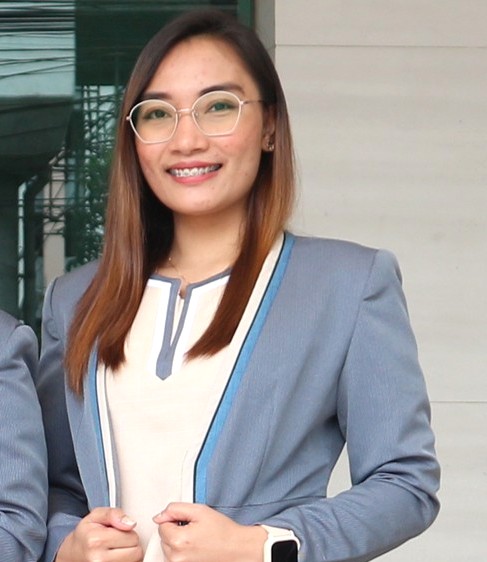
Photo courtesy of Dale Avila.
Participating in the Community of Practice changed that. Dale explained that as she listened to others in the community of practice, she realised that her experience was part of a bigger story. She was not alone. Other people were asking the same questions and trying to practise the same values. That sense of community encouraged her to speak not only for herself, but also with her family and in the workplace.
Rethinking assumptions
For Effer Mark Joseph Matias of Alalay sa Kaunlaran Inc (ASKI), another MFI partner, the shift was in how he saw ability. Growing up, he had absorbed familiar expectations about gender roles. Men were expected to provide. Some roles were seen as more suitable for women, others automatically associated with men. These assumptions were not unusual. They were simply part of how the world appeared to work.
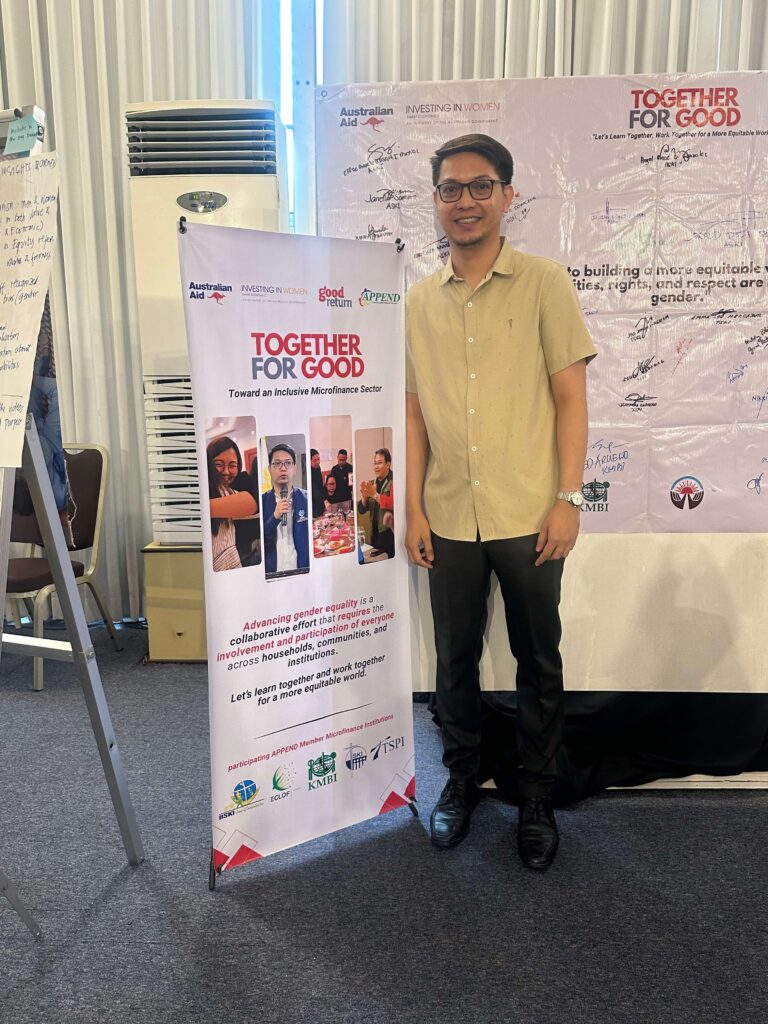
Photo courtesy of Effer Mark Joseph Matias.
Through gender advocacy training and community discussions, Effer began questioning these assumptions. Rather than viewing work and leadership through the lens of gender, he increasingly saw capability and skills as the qualities that mattered most. He also connected this lesson to life beyond the workplace. If economic and care responsibilities are shared, families are better able to distribute pressures fairly rather than have it fall on any single person.
IW’s Strategy argues that social change is often slowed not because people oppose gender equality, but because they underestimate how many others support it. People who already hold progressive attitudes may remain silent because they do not see enough evidence that others share their views. Communities of Practice help address this by creating spaces for learning, reflection, and mutual support.
The experience of Together for Good demonstrates the importance of making change personal. When gender equality shifts from being an abstract concept to a personal concern, people become more willing to question assumptions, practise new behaviours, and share what they have learned with others. For Together for Good, that shift is creating the foundation for something larger: A growing community of microfinance practitioners who see gender equality not as someone else’s issue, but as part of their own story.