



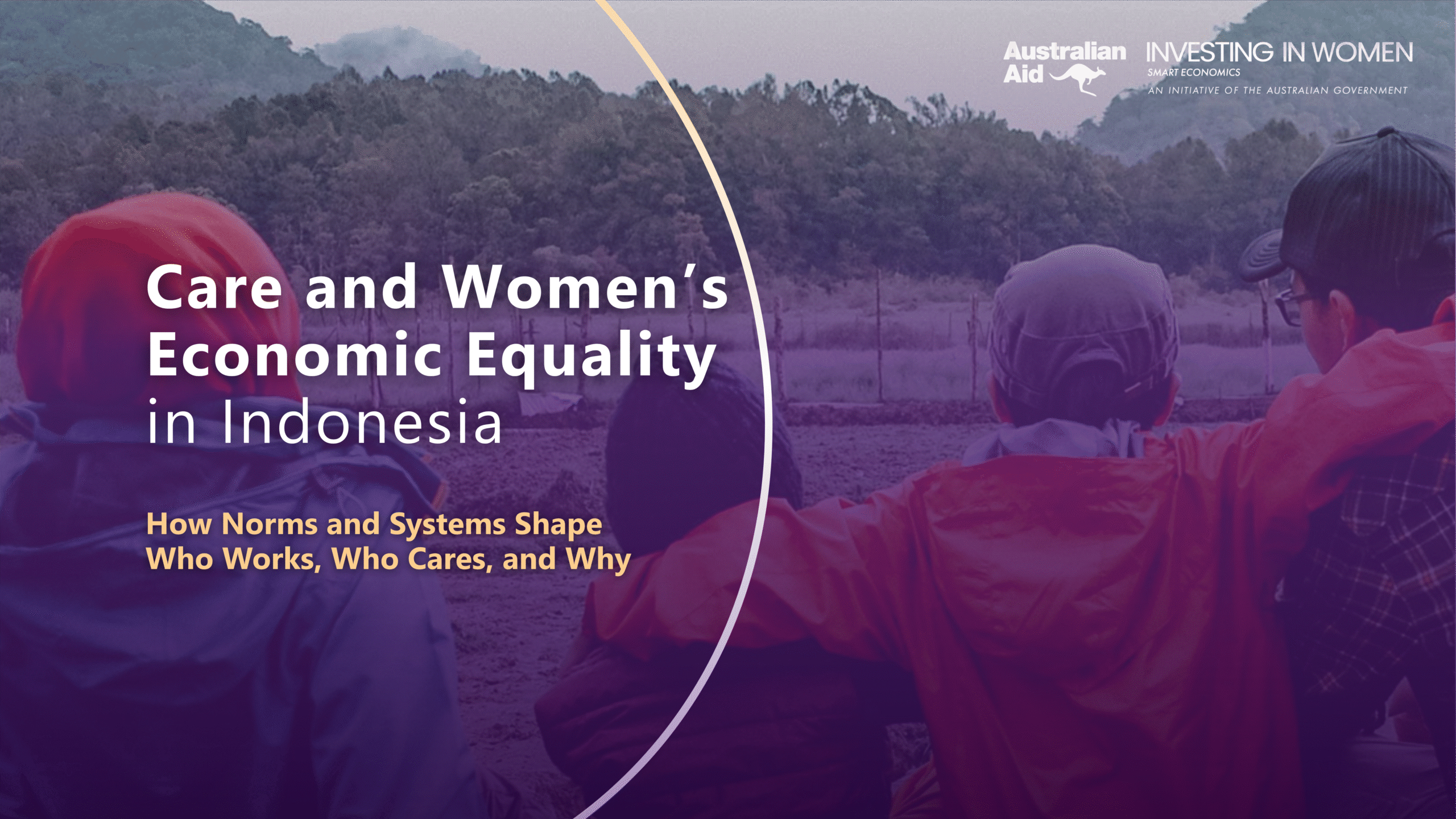
Investing in Women: Care and Women’s Economic Equality in the Philippines
This video features why women's economic equality is not simply a question of choice or capability, but also of whether care systems and social norms make equality possible.
Most young, urban Filipinos support equal sharing of childcare, housework, and earning responsibilities. Yet women still spend around three times more on unpaid care work than men, and many reduce paid work or leave the workforce altogether due to caregiving responsibilities.
Our latest Social Norms, Attitudes and Practices Survey (SNAPS) report shows that women’s economic equality is shaped not only by attitudes, but also by the care systems and social norms that influence who works, who cares, and who gets left behind.
While attitudes toward gender equality are changing in the Philippines, other factors like rapid urbanisation and smaller family sizes are increasing demand for paid care services, placing new pressures on how care is provided and shared.
Terms of Use:
All materials presented on this Media Gallery is licensed under Creative Commons 4.0 International license.
The details of the relevant license conditions are available on the Creative Commons website (accessible using the links provided) as is the full legal code for the CC BY-NC-ND 4.0 license.
Content from this website should be attributed as Investing in Women, an initiative of the Australian Government – https://investinginwomen.asia.