




This profile was originally published in Indonesian on Magdalene: https://magdalene.co/story/ghevin-agung-nugraha-advokat-gender-laki-laki/
Author: Sonia Kharisma Putri
For Ghevin Agung Nugraha, 23, understanding gender is not just theory or advocacy slogans. It is a process of understanding himself as well as a turning point in the way he sees the world and the people around him.
Ghevin is currently a Junior Research Fellow at Yayasan Pelopor Pilihan 17 (Kawula17.id), part of the Aliansi Laki-laki Baru (ALB). He is also an active volunteer in various organizations, including Plan International Indonesia. However, his journey as a gender advocate began long before all of that.
He grew up in a conservative family, where boys must be strong, tough, and never cry. “Umi—my mom—always said boys can’t be whiny. They must be strong,” Ghevin told Magdalene.
However, Gheving displayed qualities that set him apart from the boys around him. Because of this, from a young age, his softness was often seen as failing to meet masculinity standards. Labels like banci or bencong were attached to him. “I once wondered if something was wrong with me,” he added.
His turning point came in university, when he began learning about gender issues and feminist study circles. From there, Ghevin began accepting himself and found the courage to speak openly with his mother. A deeply personal experience—seeing someone close become a victim of sexual violence—further strengthened his belief that this path was necessary.
Facing the Family: Starting from Home
Change within a family doesn’t happen instantly. For Ghevin, advocacy was first tested in his closest circle—his own household. He didn’t begin with debates but small conversations, especially drawing from his mother’s own experiences. Topics often centered on the double burden women face, particularly women who work outside the home yet still shoulder all domestic responsibilities.
His mother is a civil servant. Yet she was still expected to prepare meals three times a day for his father—even though she worked full time.
“At home, meals were three times a day and the dishes couldn’t be the same. I still remember Abi sitting in front of the TV while Umi prepared everything,” Ghevin said.
That routine opened his eyes to how patriarchy operates in families—men positioned as those who must be served, while women’s domestic labor is treated as obligation. Ghevin slowly introduced the concept of the double burden to his mother, explaining how women’s work is often doubled yet rarely acknowledged.
Over time, his mother became more open—listening, asking questions, even learning. When a sexual violence case happened at the school where she was teaching, she came to Ghevin for advice. The same happened when she discussed students who dressed flamboyantly at the Islamic campus where she worked.
“I usually say, we don’t have the right to judge them. But at the same time, I understand Umi’s concerns because she teaches in an environment that is strongly = -guided by religious values,” he said.
These conversations helped his mother see things more empathetically. Their relationship is now more open—she no longer comments on gender issues without discussing them with him first. For Ghevin, such small shifts mean a lot.
From New Challenges to Peer Advocacy Among Men
Changing times bring new challenges. Social media is flooded with content about “feminine–masculine energy” or the “traditional wife” trend—narratives that reinforce rigid gender roles, harming both women and men.
According to Ghevin, these trends are dangerous. He cited content claiming women only seek wealthy men—something that can fuel gender-based resentment.
“Instead of self-reflection, many men start seeing women as the source of their suffering,” he said.
For that reason, advocacy strategies must evolve. We need counter narratives, stronger digital literacy, and learning spaces free from judgment.
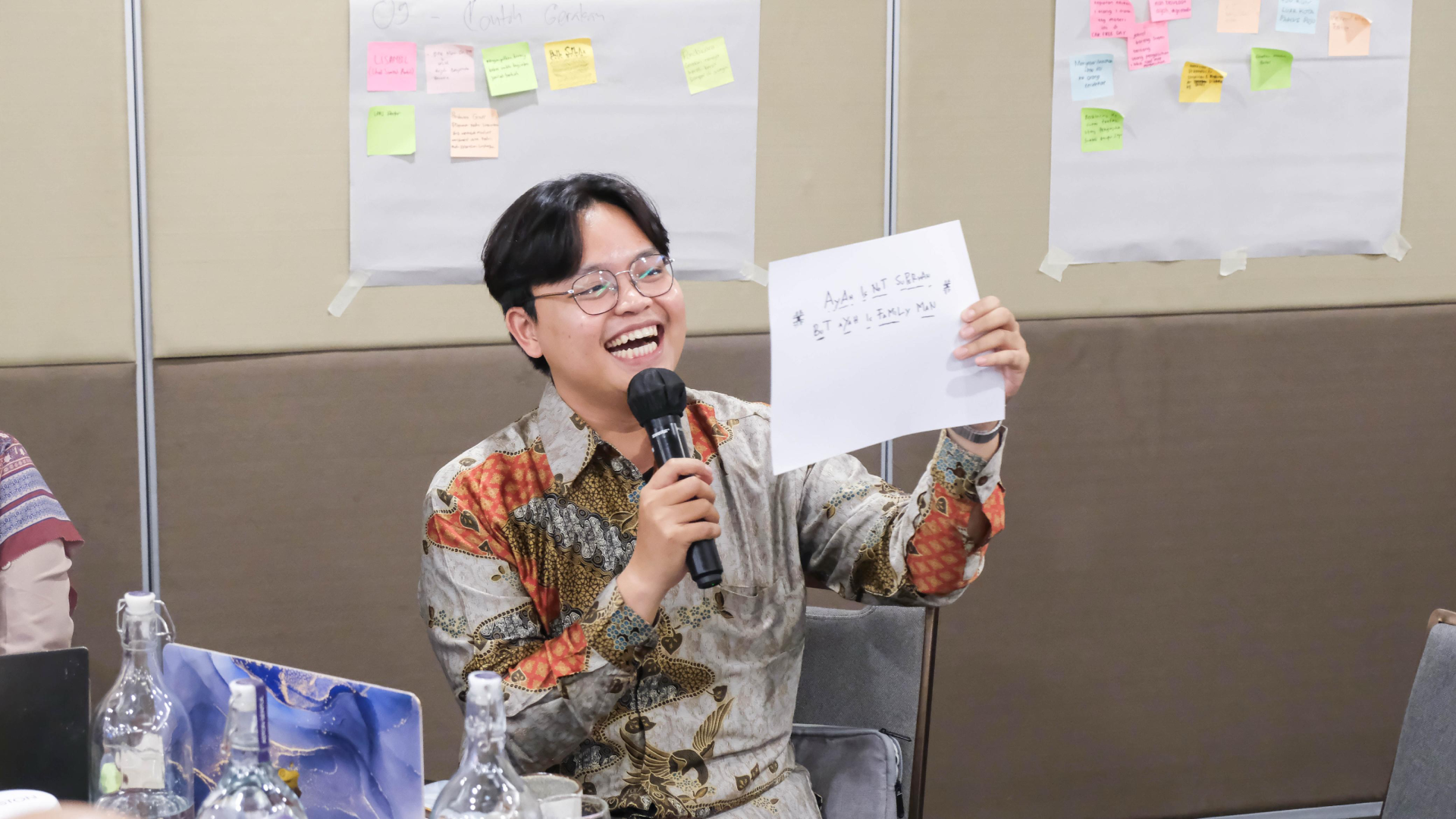
Ghevin draws from his personal experiences in speaking up on gender issues.
These concerns motivated Ghevin to act. In 2024, he joined the Youth Leadership Camp (YLC) Magdalene. As part of ALB, he initiated #BeAllyRoundtable—a reflection and discussion space for men to understand how deconstructing masculinity can help prevent gender-based violence and build more just, inclusive relationship.
This fits ALB’s approach of “from men to men.” According to Ghevin, this matters because many men only listen when another man is the one speaking.
“Our role isn’t to judge, but to create safe spaces. Validate their feelings first, then slowly shift their perspective,” he explained.
To him, the key is patience and empathy. Instead of demanding instant change, he prefers building safe spaces so men feel comfortable asking questions, reflecting on their privilege, and realizing that patriarchy harms them too.
“Men often don’t realize that masculinity standards make them lonely and unable to share burdens,” he said.
However, Ghevin understands very well that advocacy doesn’t always happen in formal settings. Often, casual hangout spaces (tongkrongan) are crucial arenas.
He uses these casual conversations to gently shift discussions toward gender issues. The approach works—his friends now avoid sexist jokes and take consent more seriously.
What Can Men Do?
Ghevin explained how the #BeAllyRoundtable approach begins with small steps. For example, listening to women’s experiences without judgment, reflecting on one’s male privileges, and recognizing behaviors that may unintentionally cause harm. From there, a new awareness gradually grows, which can spread to the surrounding environment. “You can start by reading books or learning from social media content about women’s issues.” He said.
“Change can’t happen instantly, but through understanding, we can spark conversations with other men.”
For him, equality is not about fighting men but inviting them to collaboratively create a more just world. His gender journey reminds us that advocacy always begins with personal experiences, and from there grows the belief that the world can change when we dare to create space for listening to, and understanding one another.

Ghevin balances being an ally to women and an advocate for gender equality among men.