



Growing up in a rural district in Hải Phòng, Thu Phuong rarely questioned the social rules around her. In her community, a man’s success was measured in income, and a woman’s happiness was defined by marriage and motherhood.
Even as she excelled academically, the pressure to conform was constant: relatives questioned why her parents had only daughters, and community members speculated whether she would be “too educated” to find a husband.
Yet despite these expectations, Phuong held onto the freedom her parents quietly offered. Both teachers, they encouraged her to study, think independently, and imagine possibilities beyond the narrow ideals around her.
Even without language for gender equality, Phuong carried an early sense of questioning that would define her journey: Why are girls devalued? Why are women’s achievements overshadowed by their marital status? Why are her ambitions seen as an oddity?
Finding Gender Through Storytelling and Media
Phuong’s turning point came in 2020, when she and her classmates entered a competition on corporate social responsibility communication and won. The victory led to an unexpected invitation: to join the Goodvertisings in Vietnam project under TUVA, which sought to promote more gender-equal advertisements.
At that time, she had zero formal knowledge about gender equality. What she did have was curiosity, discipline, and a growing discomfort with what she saw in media and advertising. Her first assignment was to analyse a music video for objectification of women. The article she drafted was almost fully rewritten, but the process changed her.
For the first time, she had language for what she had sensed her entire life. The underlying question—“Why are things this way?”—finally had answers grounded in theory, not just intuition.
A Growing Awareness—and a Growing Responsibility
Phuong’s understanding deepened as she navigated TUVA’s courses, trainings, and community conversations. She learned to read narratives critically—not just in media, but in religion, culture, and everyday life.
In graduate school, her engagement with academic discussions and the VGEM’s “Philosophy of Gender” course sparked an interest in the intersections of gender and religion, helping her see how different belief systems coexist and shape social norms and interactions.
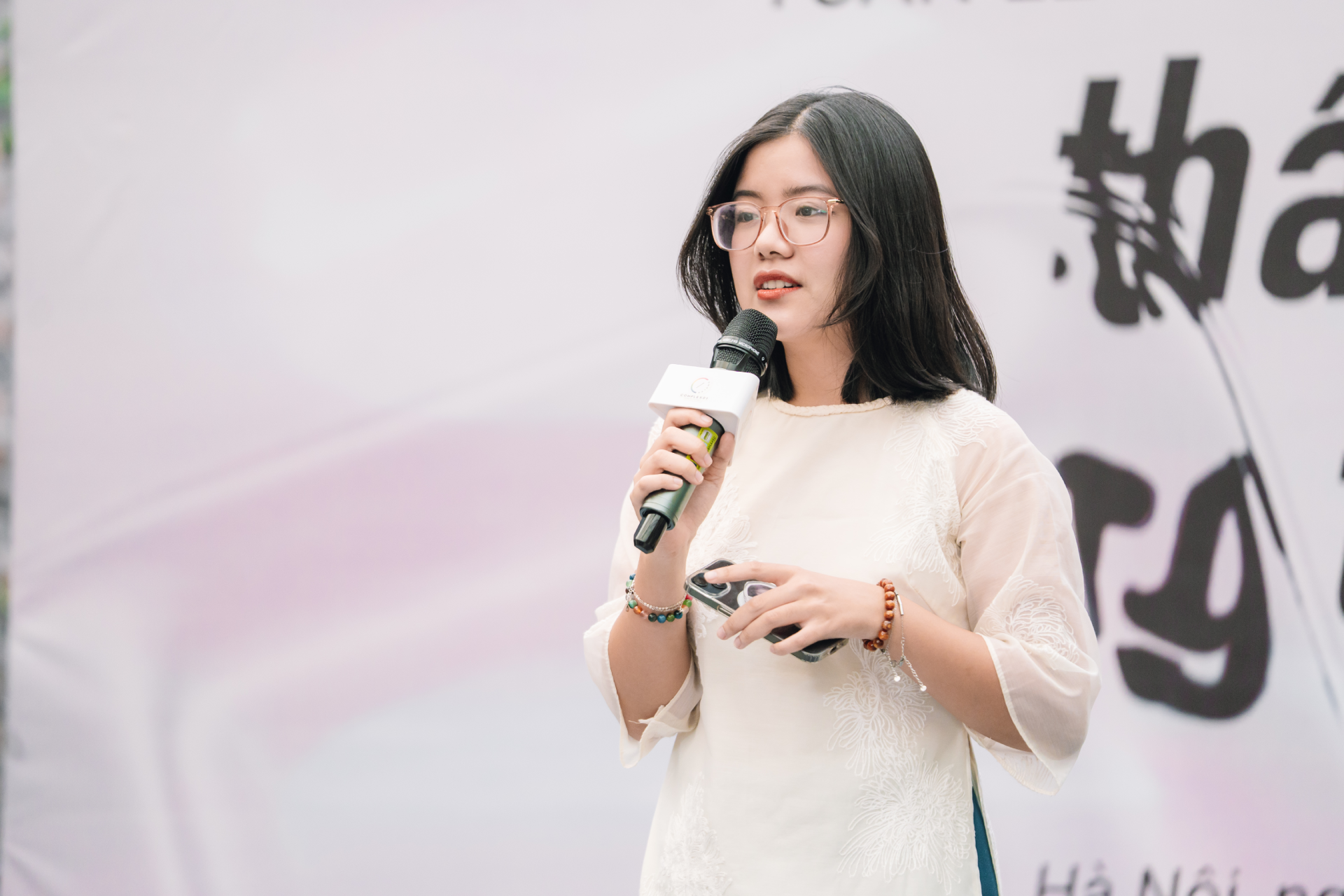
Phuong presenting at the opening ceremony of Gender Week in Hanoi. (Photo from TUVA-Nha Nhieu Cot)
These experiences reshaped her worldview: Instead of viewing choices as right or wrong, she learned to see them as complex, contextual, and deserving of compassion. This shift—from binary thinking to inclusive understanding—demonstrates a change that Investing in Women hopes to support among early adopters of gender equality.
Becoming a Bridge for Young People
As Phuong grew in confidence, she also found herself wanting to support other young people who, like her, had never been shown that “development communication” or “gender work” even existed as career paths.
She returned to her university as a teaching assistant and quickly noticed that many students were curious about social issues but lacked access to opportunities. In response, she and two friends founded DIPLOM-ANT, an initiative connecting young people to social development projects.
But the moment that marked her full commitment came when she returned to TUVA, now as Campaign Lead of Nhà Nhiều Cột (A House With Many Pillars), the campaign supported by IW.
The role was a dream she had held since joining as a contributor. Accepting it meant choosing the “development life”—a life where she could live her values daily and help shape the values of others.
Turning Awareness into Possibility: Even a tiny move matters
Believing deeply in the mission and core values that the Nhà Nhiều Cột team has built together—promoting equality, tolerance, and care among young people in Vietnam—Phuong is now focused on designing communication and educational approaches that are culturally grounded in the Vietnamese context. Her goal is simple but ambitious: to help young people become more aware of existing inequalities and to see the possibility of changing their lives for the better in their own ways.
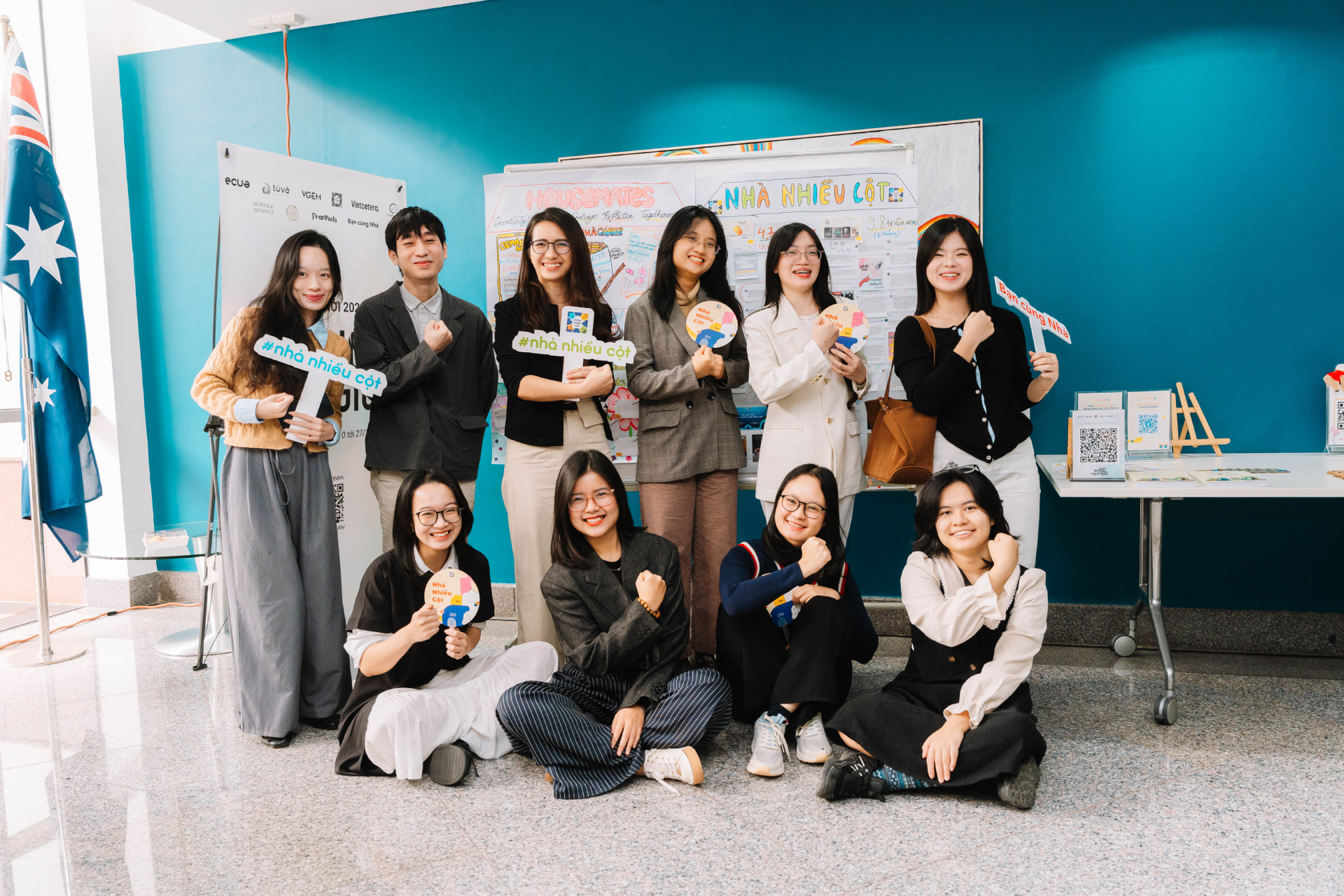
Phuong with TUVA staff and Housemates members at the Australian Embassy in Hanoi
Phuong emphasises that not everyone needs to become a full-time gender advocate. Young people may grow into marketers, teachers, lawyers, or professionals in entirely different fields – but once they are clear about their chosen values, they will find their own ways to express them. Even small changes in daily actions matter, and every effort deserves recognition.
She hopes that one day, another young person will experience the same “aha moment” she once did – the realisation that injustice is not fixed, and we are not that hopeless. We may not be heroes, she says, but even if we are “as small as ants,” we can still try to carry something much bigger than ourselves.
“When You Find What You Want to Live For, Just Live for It.”
On her 24th birthday, Phuong wrote a reflection that captures her journey better than any observer could:
“I see who I am when I do what I’m doing. I find my values and live them… I’m no longer afraid of being a woman. I’m no longer afraid of being a feminist. When you find what you want to live for, just live for it.”
Phuong’s story embodies the transformation that our Campaigns and Communities of Practice work aims to nurture: individuals who recognise inequality, question norms, find communities that strengthen them, and then become advocates who widen the circle of awareness.
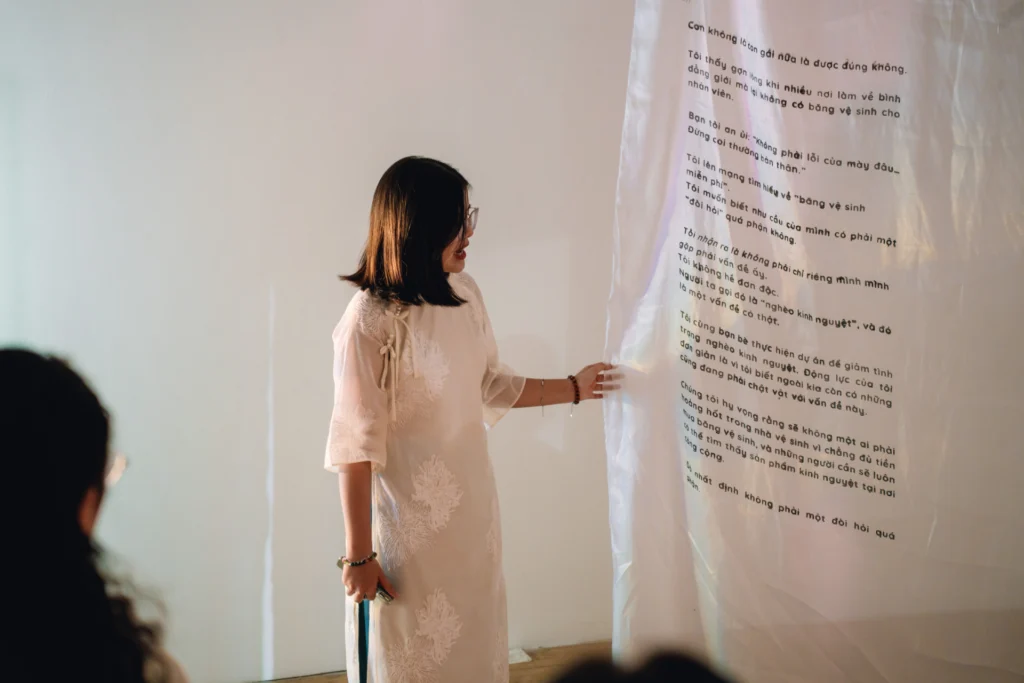
Phuong guiding participants through the “Seeing Gender in the World” interactive space at Gender Week. (Photo from TUVA-Nha Nhieu Cot)