



When Nguyễn Trịnh Thiên Kim began her career, she expected to work with data, systems, and precision. Trained in science, technology, engineering and math (STEM), she was accustomed to frameworks that could be measured and neatly explained.
But a training programme in 2021—one focused on workplace sexual harassment among garment workers—shifted her world. Listening to women recount experiences of stigma, fear, and silence, Kim encountered a reality that statistics alone could not fully capture.
It was the beginning of a journey that would eventually lead her into the heart of Vietnam’s gender advocacy ecosystem. Today, Kim is part of the Vietnam Gender Equality Movement (VGEM), a Community of Practice convened by ECUE with the support of Investing in Women.
Her story demonstrates that there are early adopters who already hold progressive attitudes, and who—when exposed to evidence, like-minded peers, and structured learning—gain the confidence and capability to become gender advocates.
Finding a Community, Not Just a Classroom
Before joining ECUE’s courses, Kim had a basic understanding of legal protections, from CEDAW to labour codes. But she realised something important: laws can recognise inequality, but they cannot fully explain why societies tolerate it.
Through ECUE’s Decoding Gender Norms course, she appreciated gender as a social structure: something produced through discourse, institutions, and daily interactions. She began to understand not just what inequality looks like, but how it is made and maintained.
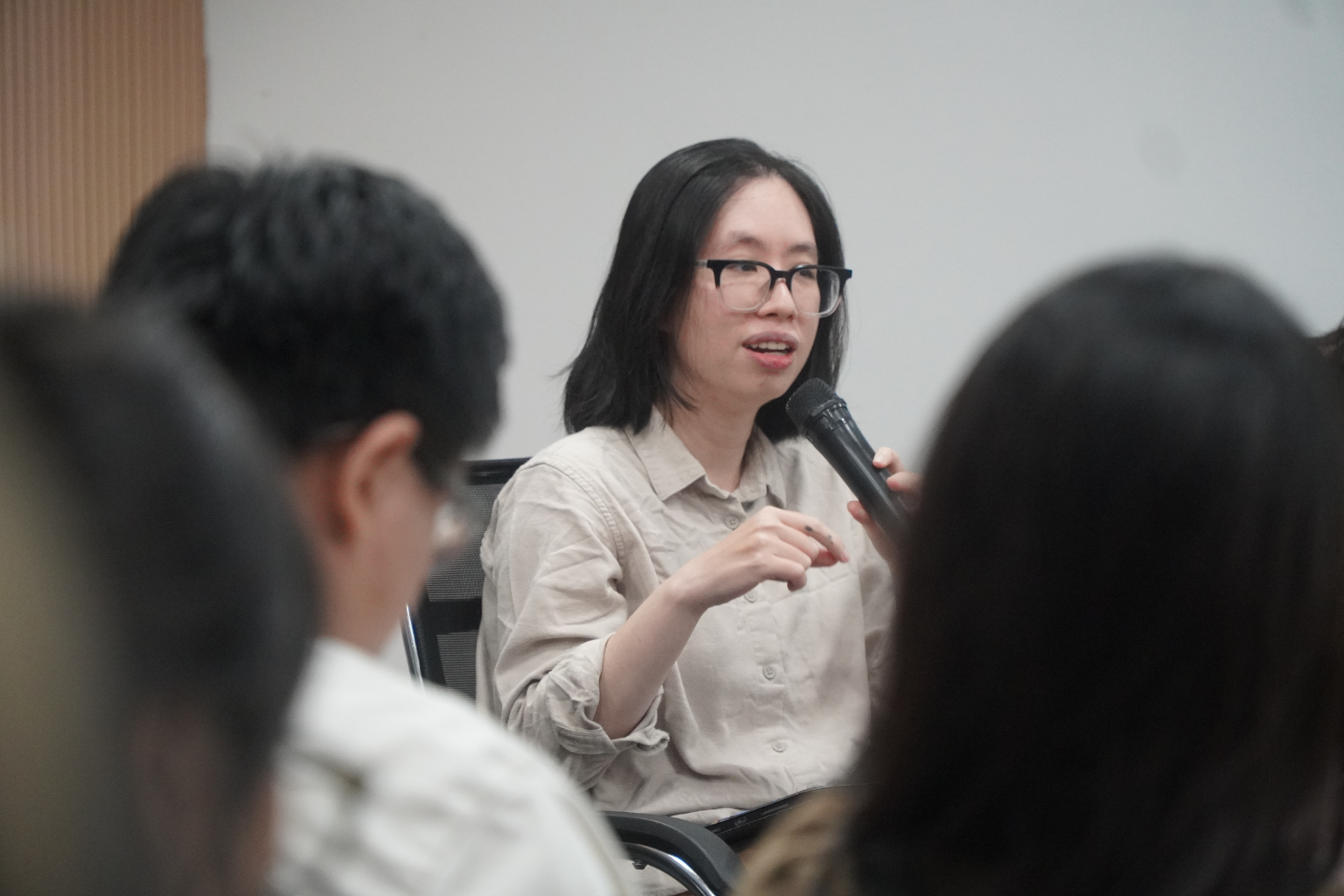
Kim presenting at the talk “Pronatalism: A Gendered Discussion” in Hanoi.
Kim’s next turning point came when she joined other VGEM courses, including “Philosophy of Gender” and “Gender Theory: Translating from Vietnamese to Vietnamese.”
These courses gave her language for experiences she had long struggled to articulate, peers who shared her curiosity and convictions, and opportunities to apply theory directly
through workshops and projects.
Turning Knowledge Into Action
Kim’s engagement didn’t stop at theory. She began co-designing and co-facilitating workshops to help youth and garment workers decode gender norms through movies analysis and group discussion. She also teamed up with her VGEM peers to produce a TikTok series unpacking workplace gender issues faced by young professionals, where she contributed as the scriptwriter. She even authored a conference paper on media discourse around workplace sexual harassment, bringing together theory, analysis, and real-world implications.
Through these experiences, Kim realised that advocacy could take many forms, not only about being vocal as influencers or public speakers; but it could also mean building knowledge and introducing frameworks that enabled people to think differently.
When Kim later began her Master’s in Equality Studies in Ireland, this realisation and her VGEM grounding followed her.
“ECUE gave me access to some of the most fundamental knowledge in gender studies. Because of that, when I started my Master’s programme, I did not feel lost or overwhelmed. My learning and research felt much more grounded and manageable. Without ECUE, I honestly don’t think this journey would have been nearly as smooth for me,” Kim said.
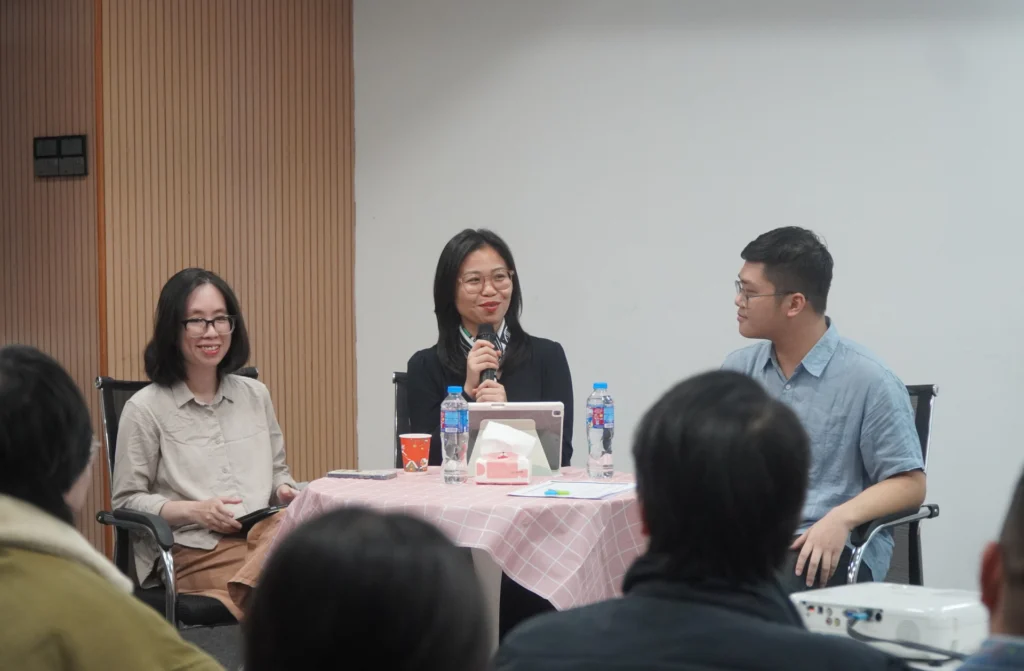
Kim serving as a panellist at the talk “Pronatalism: A Gendered Discussion.”
As debates on pro-natalism resurfaced in Vietnam, Kim recognised a gap: little analysis explored pro-natalist narratives through a gender lens. She chose to study how state, media, and societal expectations shape reproductive norms—and how they affect women’s lives.
After completing her thesis, she brought the work back home, co-organising “Pronatalism: A Gendered Discussion” with VGEM, HADEUS Vietnam, and ECUE. For her, it wasn’t enough for research to remain in academia; it had to foster community dialogue.
Knowledge as Advocacy, Advocacy as Community-Building
Kim represents a growing group of early adopters who are shifting from learning about gender norms to shaping the discourse themselves. Through research, writing, public speaking, workshop facilitation, and community collaboration, she turns abstract theories into accessible insights, helping others recognise the social structures shaping their everyday lives.
Her story validates a hypothesis that underpins Investing in Women’s approach to social norms: When early adopters see evidence, find peers, and build knowledge together, they become powerful advocates who help accelerate norm change.
A Future Built on Critical Thinking and Community
Kim often says she didn’t have the language for many of her early questions. Now, she helps others find language for their own.
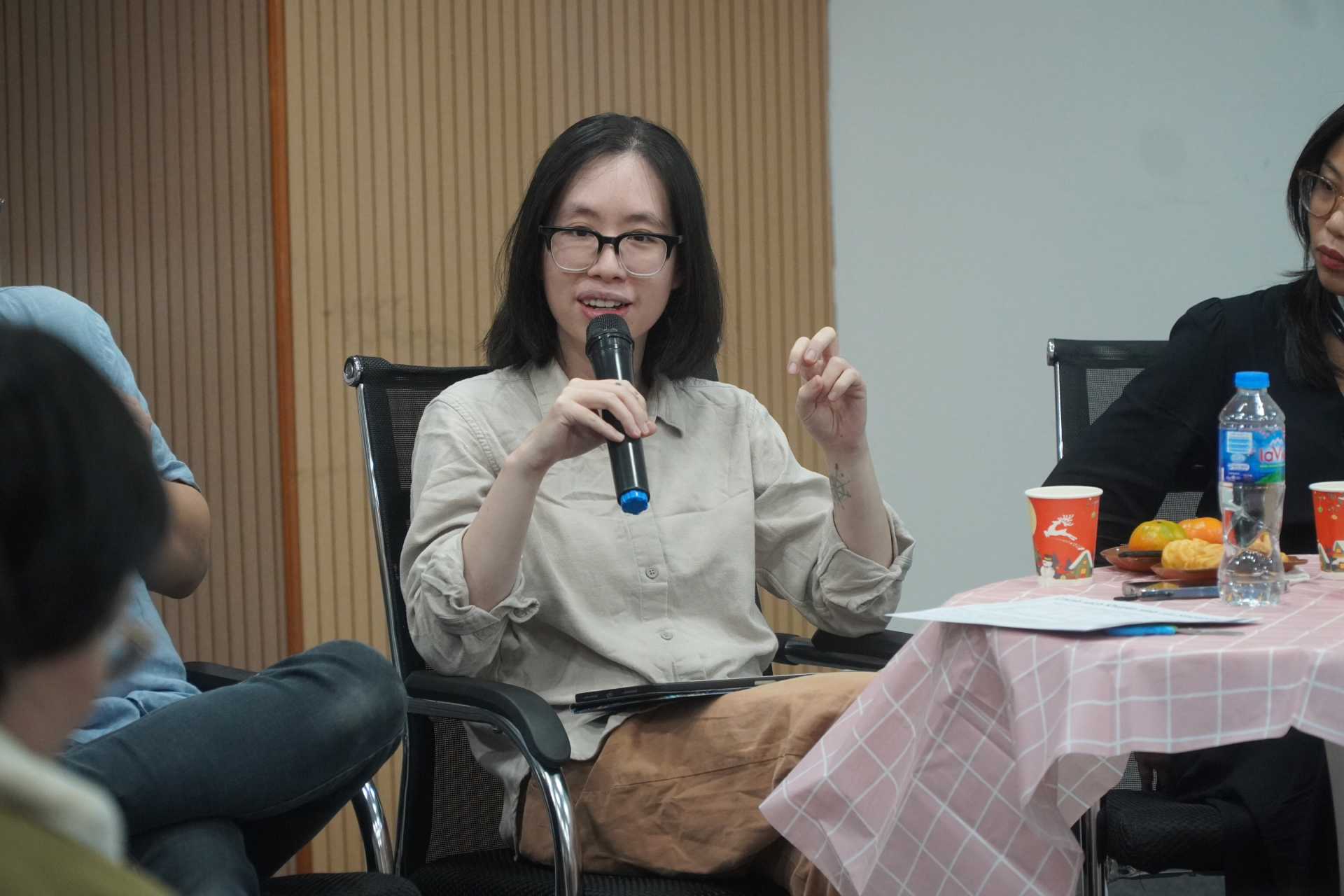
Kim speaking at the talk “Pronatalism: A Gendered Discussion.”
Her journey—from STEM to gender theory, from individual curiosity to community activism, from local workshops to international research—shows how Communities of Practice like VGEM create the conditions for deep, sustained advocacy.
By building knowledge collectively and sharing it openly, she helps shape a future where gender equality conversations are informed, evidence-based, and accessible to all.